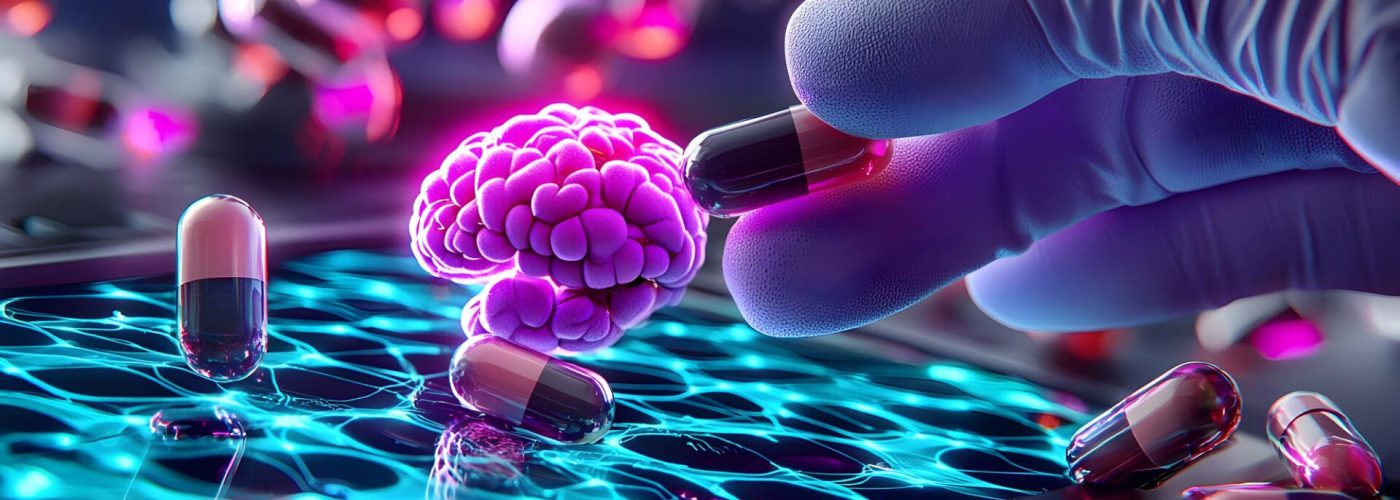
Large language models and structure predictors are genuinely transformative — but the excitement is obscuring real limitations. Biology does not always behave like a pattern recognition problem.
Artificial intelligence has rapidly become the centerpiece of modern drug discovery, promising faster timelines, reduced costs, and breakthroughs in areas long considered intractable. From protein structure prediction to virtual screening and de novo molecule design, AI systems are delivering results that would have been unimaginable just a decade ago. Yet beneath the excitement lies a quieter, more complex truth: biology is not merely a data problem waiting to be solved—it is a deeply intricate, context-dependent system that resists simplification.
At the heart of the hype is the assumption that with enough data and computational power, biological systems can be modeled, predicted, and ultimately controlled. While AI excels at pattern recognition, biology often operates beyond patterns. Cellular behavior is shaped not only by genetic sequences but also by temporal dynamics, spatial organization, environmental cues, and stochastic events. A protein may behave differently depending on the cell type, developmental stage, or disease state—factors that are rarely captured fully in datasets used to train AI models.
One major limitation lies in the quality and completeness of biological data. Unlike fields such as image recognition, where datasets are vast and relatively standardized, biological data is often noisy, sparse, and biased. Experimental conditions vary widely, and negative results are underreported. AI models trained on such data can produce confident predictions that fail when tested in real-world biological systems. This gap between in silico promise and in vivo reality remains one of the biggest bottlenecks in drug development.
Another overlooked challenge is emergent complexity. Biological systems exhibit properties that cannot be understood simply by analyzing individual components. Pathways interact, feedback loops regulate responses, and small perturbations can lead to disproportionately large effects. AI models, particularly those focused on single targets or linear relationships, may miss these nonlinear interactions. As a result, drugs designed through AI pipelines may perform well in isolated assays but fail in clinical settings where the full complexity of the human body comes into play.